Free shipping on prepaid orders · 7-day easy returns · ₹200 off ₹999+ with code BABYLOVE
Jhabla vs Romper vs Onesie: Which Is Best for Indian Weather?

For a newborn in hot Indian weather, a loose cotton or muslin jhabla is the coolest and easiest outfit for home. A onesie (bodysuit) is the most versatile everyday base layer, and a full-length romper is best for cooler nights, AC rooms and outings. Most families use all three, switching by age, season and occasion.
This article is part of our newborn baby clothes guide for India. Below we define each garment, compare them side by side, and give clear recommendations by age and season so you can buy fewer, better pieces.
What is a jhabla?
A jhabla (also spelt jabla) is a traditional Indian baby top: a short, loose, front-opening garment that fastens with fabric ties, buttons or snaps. It has no bottom, so it is worn with a diaper or a cloth langot, and sometimes with loose pyjamas. Jhablas are usually made from soft cotton or muslin (mulmul).
Why parents like them: nothing goes over the baby’s head, the loose cut lets air circulate, and diaper changes need no unsnapping at all. They are a staple for the first weeks at home, especially in summer.
Points to watch: keep ties short and knotted securely, because the American Academy of Pediatrics advises avoiding ribbons or strings that could wrap around a baby’s neck (HealthyChildren.org, AAP). Jhablas also ride up once a baby starts kicking and rolling.
Kidspot Shop doesn’t currently sell jhablas. For a similar front-opening style, see our Soft Bamboo Cotton Front-Open Velcro Nightwear Set, which opens at the front with a touch-close fastening and comes in 0–3 and 3–6 months.
What is a romper?
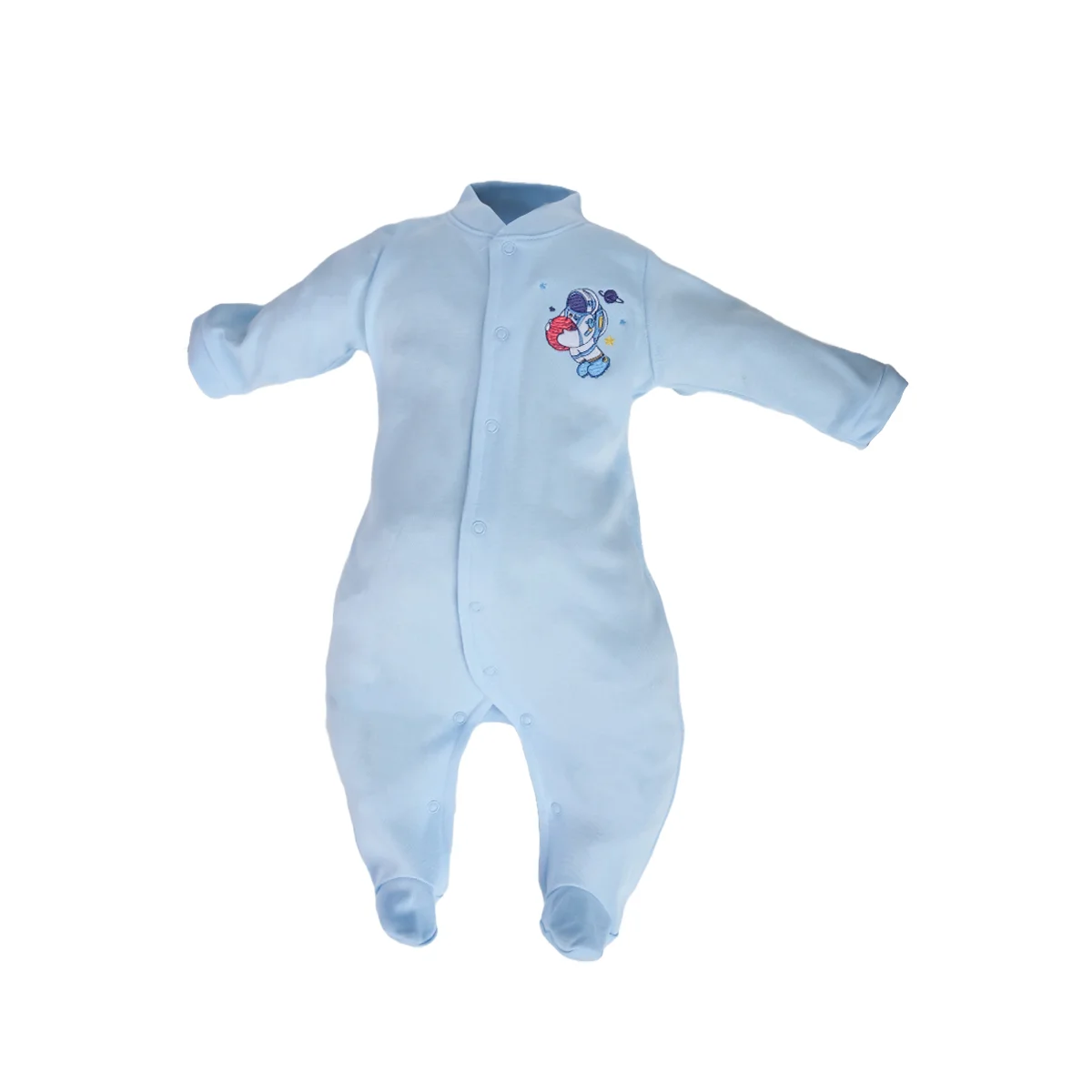
A romper is a one-piece outfit that covers the body and legs. In India the word usually means a full-length suit, with full or half sleeves, that fastens with snap buttons down the front and often along the legs. Some sellers also use “romper” for a shorter, shorts-length version.
Rompers stay in place, keep the diaper covered and protect legs from mosquitoes and cool air, which makes them good for nights, AC rooms, travel and visits.
What is a onesie (bodysuit)?
A onesie, also called a bodysuit, is a one-piece top that snaps closed under the diaper. It has no legs. Most have an envelope (overlapping) neckline that stretches wide so you can pull it over the head or down past the shoulders.
A onesie works on its own on hot days and as a base layer under a romper or pyjamas when it is cooler. Because it cannot ride up, it keeps the tummy covered when your baby is lifted or starts moving.
Jhabla vs romper vs onesie: comparison table
| Factor | Jhabla | Romper | Onesie (bodysuit) |
|---|---|---|---|
| Coverage | Top only | Body, arms (often) and legs | Body only, short or long sleeves |
| Ease of diaper change | Easiest: nothing to undo | Easy if snaps run down the legs; slow if they don’t | Easy: snaps at the crotch |
| Dressing a newborn | Easiest: opens fully at the front | Easy if front-opening | Over the head (envelope neck helps) |
| Warmth | Lowest: very airy | Highest of the three | Medium; depends on sleeves and fabric |
| Best season | Summer, humid monsoon days | Winter, cool nights, AC rooms | All year, alone or as a layer |
| Typical age range | Newborn to about 3–6 months | Newborn to toddler | Newborn to toddler |
| Stays in place | No, rides up when baby moves | Yes | Yes |
| Best occasions | Home, day naps, first weeks | Nights, travel, outings, photos, visiting relatives | Everyday wear, daycare, base layer |
| Common fabrics | Muslin, thin cotton | Cotton interlock, bamboo-based knits, fleece for winter | Cotton interlock or jersey |
Age ranges are a general guide; babies grow at different rates, so always check measurements on our size guide.
Which is best for Indian weather?
India’s weather ranges from hot and dry to humid and wet to cold at night, often in the same city across a year. Here is how each garment fits each season.
Summer
In hot weather, fewer and lighter layers are safer and more comfortable. The AAP suggests that above roughly 24°C (75°F), a single layer of clothing is usually enough for a baby (HealthyChildren.org, AAP).
- Best pick: a muslin or thin cotton jhabla at home, or a short-sleeved cotton onesie.
- Use a romper only in an air-conditioned room or for a short evening outing, and choose a thin cotton one.
Monsoon
Humidity makes everything feel sticky, and clothes take longer to dry.
- Best pick: thin cotton onesies and jhablas that dry quickly. Keep a few extra sets in rotation.
- Rompers are useful in the evening for protection from mosquitoes, but make sure they are completely dry before use.
Winter
Winters are mild in much of south and east India but cold at night in the north.
- Best pick: a cotton onesie as a base layer, with a full-sleeve romper on top. Add socks, and use a light blanket or sleep sack for sleep.
- Avoid overheating: check your baby’s chest or the back of the neck rather than their hands.
For layering rules and room temperatures, see how to dress a newborn in Indian summer, monsoon and winter.
Recommendations by age
0–3 months
Newborns spend most of the day sleeping and need diaper changes many times a day. Prioritise front-opening, easy styles.
- Jhablas or front-opening tops for home in warm weather.
- Short-sleeved cotton onesies for everyday wear and as a base layer.
- Two or three full-length rompers for nights, AC rooms and outings.
3–6 months
Babies kick, roll and get grabbed by relatives far more. Jhablas start riding up.
- Onesies become the main everyday piece.
- Rompers for nights and outings; snaps down the legs save time.
- Keep a few jhablas for very hot afternoons.
6–12 months
Sitting, crawling and early standing call for clothes that move with the baby.
- Onesies with separate shorts or pyjamas, or two-piece sets.
- Rompers for sleep and travel.
- Jhablas are usually outgrown in fit and practicality by now.
What Kidspot Shop offers in each style
Rompers (browse the full baby rompers collection):
- Full Sleeves Romper Set Printed: listed as soft cotton, newborn size, several colours (₹699 at the time of writing).
- Full Sleeves Rompers: cotton, currently listed in 6–9 months (₹499 at the time of writing).
- 5 Pc Full Cotton Set: full-sleeve romper with front buttons, cap, booties, wrapper and hanger, newborn size (₹799 at the time of writing). A practical first outfit or gift.
- Winter Full Hooded Baby Suit: newborn size, cotton per the listing (₹999 at the time of writing). As the listing itself notes, hooded garments are not suitable for sleeping in.
Onesies (bodysuits):
- Onesies 0 to 3 Months, 3 to 6 Months and 6 to 9 Months: packs of three short-sleeved interlock cotton bodysuits with envelope necks and snap buttons (₹899 per pack at the time of writing).
- Onesies Unisex Short Sleeves Interlock Bodysuit, Pack of 3: multicolour packs.
Front-opening alternative to a jhabla: the Soft Bamboo Cotton Front-Open Velcro Nightwear Set, 0–3 and 3–6 months.
You can also browse the newborn baby clothes collection, all baby dresses and clothing or baby gift sets.
A simple starter mix for the first three months
There is no fixed rule, but a mix like this covers most families who do laundry every day or two. Adjust for your climate and how often you wash; for exact numbers of each piece, use our newborn clothes checklist.
| Garment | Hot months | Cooler months |
|---|---|---|
| Jhablas or front-opening tops | More (main daytime wear) | Fewer (layer under a romper) |
| Short-sleeved onesies | Several | Several, as base layers |
| Full-length rompers | One or two (AC, outings) | More (main night wear) |
Fabric matters as much as style. Our guide to the best fabric for newborn baby clothes compares cotton, muslin and bamboo. If you are unsure about cut and fit, read what to look for in a good baby outfit.
Frequently asked questions
Is a jhabla or a romper better for a newborn?
For the first weeks at home in warm weather, a jhabla is usually easier and cooler. A romper is better at night, in AC rooms and for outings because it covers the legs and stays in place. Most parents keep both.
What is the difference between a romper and a onesie?
A romper covers the body and legs in one piece. A onesie (bodysuit) covers only the body and snaps closed under the diaper, so it has no legs. Onesies are often worn under rompers or pyjamas as a base layer.
Until what age can a baby wear a jhabla?
Many families use jhablas until about three to six months. Once a baby starts rolling and kicking a lot, jhablas ride up and onesies or two-piece sets become more practical.
Are rompers too hot for Indian summer?
A thick, full-length romper can be too warm on a hot day without AC. In summer, choose a thin cotton romper for AC rooms or evenings, and use a jhabla or short-sleeved onesie at other times. Check your baby’s chest or neck for sweat.
Can my baby sleep in a hooded romper?
It is best not to. Hoods can cover the face during sleep, and Kidspot Shop’s own listing for the hooded winter suit says hooded garments are not suitable for sleeping in. For sleep, choose a hood-free romper; the AAP also advises against hats indoors once you are home from hospital (HealthyChildren.org).
Shop the baby rompers collection, or go back to the complete newborn baby clothes guide for checklists, sizes and fabric advice.
About the author: Md. Farhan Alam is the founder of Kidspot Shop, which he started in 2022 to bring softer, fairly priced baby clothes to families across India. He is not a medical expert, so the safety guidance in this article is general; please check with your paediatrician about your own baby.
